
When we discuss Aventador versus SVJ, we refer to two of the most remarkable supercars on the planet, both able to go from 0-100 km/h in under 3 seconds and achieving top speeds exceeding 200 mph. With the end of the Aventador, Lamborghini bids farewell to the first 60 years of its rich legacy, but leaves behind iconic versions that still impress.
Both the Aventador SVJ and its previous version SV stand at the top of Italian design and technology. While the Lamborghini Aventador SVJ boasts an impressive 770 hp and 720 Nm of torque, the SV version is similarly powerful with its 740 hp and 690 Nm. Moreover, the comparison between the Aventador SV and the SVJ shows slight differences in speed, with the SVJ able to cut a tenth of a second off the 0-60 mph acceleration time. Additionally, for those curious about Aventador Ultimae versus SVJ, it is important to note that the Ultimae, being the final model of the series, was fitted with 769 HP, giving it 10 more horsepower than the SVJ and truly becoming the strongest Lamborghini V12.
In this article, we will closely explore the distinctions between these incredible cars, looking at everything you need to know before making a choice about which one is really better.
Evolution of the Aventador: from SV to SVJ
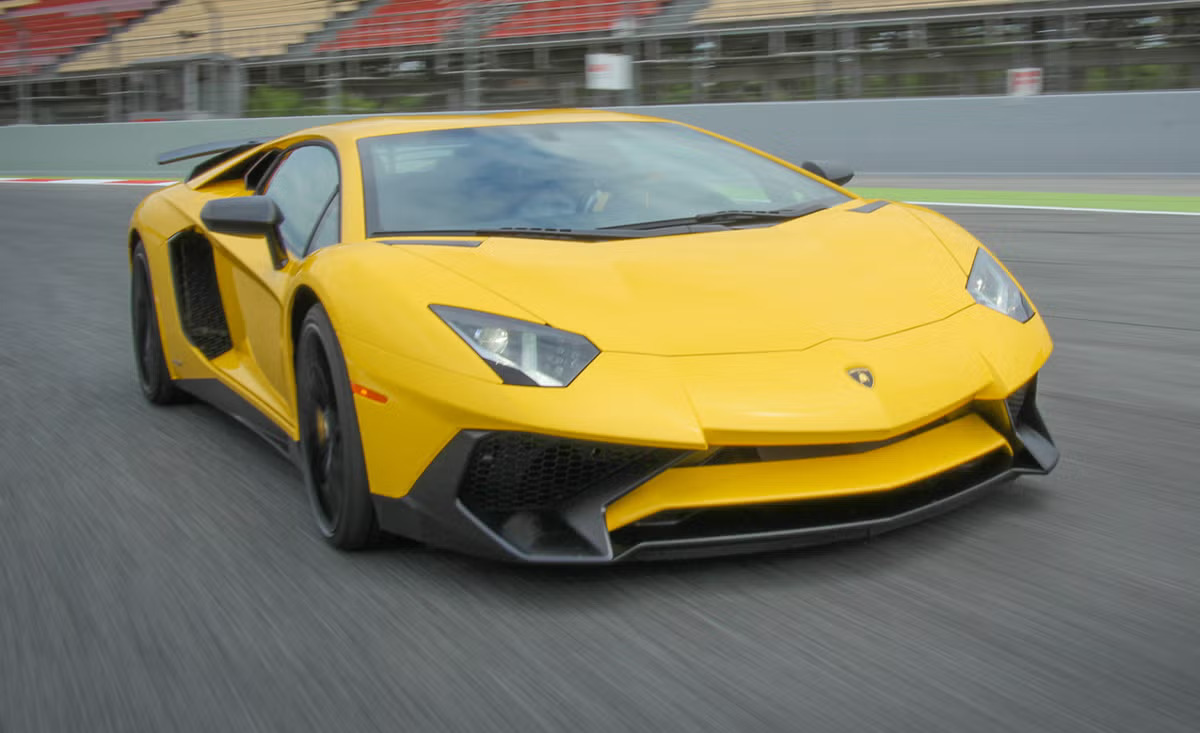
The evolution of the Aventador models from SV to SVJ is a fascinating chapter in Lamborghini’s history, with each variant bringing significant improvements over its predecessor.
Launch of the 2015 Aventador SV: SuperVeloce in action
The SuperVeloce (SV), announced at the 2015 Geneva Motor Show, represented a notable improvement over the standard Aventador. Its name, which in Italian means «super fast», was not just a label, but a promise of performance. Lamborghini engineers increased the engine’s power to 740 hp (552 kW), while simultaneously reducing the weight by 50 kg thanks to the extensive use of carbon fiber. Thus, the weight/power ratio reached an impressive 1 HP per 2 kg.
With a 0-100 km/h acceleration time of 2.8 seconds and a top speed of over 350 km/h, the SV set a time of 6:59.73 around the Nürburgring, initially placing second in the production car standings. The price of this Italian jewel was 327,190 euros (excluding VAT), with production limited to 600 units.
The arrival of the SVJ in 2018: what «Jota» means for Lamborghini
In 2018, Lamborghini presented the Aventador SVJ (SuperVeloce Jota). The term «Jota» has historical roots, having originally been used for a one-off, extreme performance version of the classic 1970 Lamborghini Miura. The letter «J» refers to Annex J of the FIA regulations manual for racing cars.
With an impressive output of 770 hp and 720 Nm of torque, the SVJ broke the Nürburgring record with a time of 6:44.97, dethroning the Porsche 911 GT2 RS. Production was limited to 900 units, guaranteeing exclusivity.
Differences in philosophy: raw performance versus technological refinement
While both models are great, they represent different philosophies. The Aventador SV offers a more intense and pure driving experience with a stiffer and less technology-focused suspension. On the other hand, the SVJ brings technological refinement through the ALA (Aerodinamica Lamborghini Attiva) system and four-wheel steering.
The ALA system allows the SVJ to adjust airflow based on driving conditions, increasing downforce by 40% compared to the SV. Furthermore, rear-wheel steering ensures agility at low speeds and stability at high speeds, completely transforming the handling dynamics.
In essence, aventador SV vs SVJ is not just a comparison of numbers, but a choice between pure brutality and advanced technological precision.
Power and performance: Aventador SV vs. SVJ
The heart of every Lamborghini is the engine and, in the case of the aventador SV vs SVJ duel, the performance differences reveal the evolution of Italian engineering.
Engine specs: 740 hp versus 770 hp
Both models use the same 6.5-liter V12 engine, but with different settings. The Aventador SV develops 740 hp (552 kW) and 690 Nm of torque, while the SVJ offers 770 hp (566 kW) and 720 Nm of torque at 6,750 rpm. While maintaining the same displacement, every aspect of the SVJ engine has been optimized for power and efficiency.
Acceleration: 0-100 km/h in 2.8 s versus 2.7 s
Despite the difference in power, both supercars demonstrate similar sprint performance. The Aventador SV accelerates from 0 to 100 km/h in 2.8 seconds, while the SVJ records the same figure according to most sources, although some reports indicate 2.7 seconds. The SVJ takes just 8.6 seconds to go from 0 to 200 km/h.
Maximum speed: 350 km/h versus 354 km/h
The maximum speed of the SV model exceeds 350 km/h, that of the SVJ exceeds 352 km/h, some sources even indicate 354 km/h. This small difference proves that both cars are capable of extreme performance.
Exhaust system and sound: The auditory experience
The SVJ’s exhaust note is more aggressive than that of the standard Aventador, thanks to a tuning that enhances the deep bass and adds higher-pitched pops at high revs. The Brilliant exhaust system for the SVJ provides a high-frequency sound similar to that of Formula 1 cars, controlled by valves that allow volume adjustment.
Aerodynamics and handling
Aerodynamic philosophy underlies the difference between the Aventador SV and SVJ models, each representing a distinct approach to performance engineering.
Weight and distribution: SV lighter, SVJ more balanced
Although both models are built for performance, their weight and distribution differ significantly. The Aventador SV weighs 1,525kg, while the SVJ weighs 1,525kg dry. Weight distribution for the SVJ is 43% front – 57% rear, providing better balance than the SV. This optimized distribution contributes to the more precise cornering behavior of the SVJ.
ALA system on the SVJ: active aerodynamics in action
The Aerodinamica Lamborghini Attiva (ALA 2.0) system represents the main innovation of the SVJ model. Unlike the SV, which uses fixed aerodynamics, the SVJ uses active front flaps and an intelligent rear wing control system. At high speeds in a straight line, the flaps open to reduce drag and, when cornering, the system can selectively close half of the rear wing, creating the aerodynamic vectoring effect. The result is impressive: 40% more downforce than the SV with 1% less aerodynamic drag.
Rear wheel steering: high speed stability
Four-wheel steering transforms the behavior of the SVJ. At low speeds, the rear wheels turn in the opposite direction to the front wheels, virtually reducing wheelbase and improving handling. At high speeds, the rear wheels steer in the same direction, increasing stability. The system responds in just 5 milliseconds, being completely imperceptible to the driver.
Behavior on the track: who governs the curves?
On the track the differences become evident. The SVJ set the Nürburgring record with a time of 6:44.97, beating its predecessor the SV. The SVJ’s lateral acceleration reaches 1.1 g compared to the SV’s 1.05 g, demonstrating its cornering superiority. Comparative tests show that the SVJ gives the rider more confidence in fast corners thanks to recalibrated suspension and active aerodynamics.
In the Aventador SV vs SVJ duel, although the SVJ has the technological advantage, the SV remains a pure and visceral racing car, the favorite of purists who appreciate the unfiltered driving experience.
Interior and driving experience
The interiors of Lamborghini supercars perfectly reflect the design and performance philosophy, creating a distinct experience for drivers of the Aventador SV and SVJ models.
Materials and finishes: Alcantara vs extensive customization
The interior of the Aventador SV is dominated by Alcantara and carbon fiber details, creating an atmosphere inspired by motor racing. In contrast, the SVJ offers a wider range of customization options, including materials such as leather, Alcantara and Carbon Skin®, the latter 28% lighter than Alcantara. The SVJ model features the exclusive SVJ logo on the seats and contrast stitching on the outside. The SVJ also brings premium materials including Alcantara, leather and carbon fiber elements.
Comfort vs functionality: track car or GT?
While both models are performance-focused, they approach the comfort-functionality balance differently. The SVJ offers a cabin with modern features, including a customizable TFT digital dashboard and standard Apple CarPlay. For collectors, the optional telemetry system records lap times and performance. In contrast, the standard S version (not SV) offers more comfort and a pleasant interior. Sport bucket seats are standard on the SVJ, but comfort seats are available as an option.
Driving feedback: SV brutality versus SVJ precision
The Aventador SV offers a more brutal and unfiltered driving experience, feeling more connected to the asphalt. On the other hand, the SVJ is easier to drive at high speeds, providing better feedback on what the car is doing. The SVJ’s steering has been recalibrated to provide superior precision and natural feedback. The SVJ’s recalibrated suspension, with 15% greater damping force than the SV, improves body and wheel control with a focus on track performance.
Conclusion
The Aventador SV and SVJ are undoubtedly two of the most impressive creations in Lamborghini history. As we’ve seen in this review, the differences between them don’t just come down to the extra 30 horsepower the SVJ offers, but reflect two distinct philosophies of automotive excellence.
The SVJ’s ALA 2.0 system is a complete aerodynamic game changer. This system, together with the four-wheel steering, transforms the cornering behavior of the car, offering remarkable precision and superior control. The time of 6:44.97 on the Nürburgring undeniably demonstrates the technological superiority of the SVJ.
However, the Aventador SV remains the perfect choice for purists who appreciate the authentic and genuine driving experience. Although it has 740 hp compared to the SVJ’s 770, the brutal and direct feel offered by the SV cannot be replicated by any advanced technology.
Comparing the two supercars it is clear that the SVJ excels in terms of technical performance, while the SV offers a purer connection between driver and car. The choice between the two models therefore depends on the personal preferences of the buyer. In the same spirit, we also carried out a detailed analysis in which Compare Aventador to Murciélagotwo points of reference in the Lamborghini range from different generations.
For collectors the value of both models will continue to increase given the limited production: only 600 units for the SV and 900 for the SVJ. Both are highlights in any supercar collection.
Ultimately, regardless of choice, both the Aventador SV and SVJ remain testaments to Italian engineering genius and Lamborghini’s passion for extreme performance. They perfectly symbolize the brand’s V12 heritage, before the era of electrification completely transformed the luxury and ultra-performance ca
latest posts published
The most comfortable car: a top 10 of the most comfortable cars
Van rental in Bucharest: when is it best and which model to choose? | Dex Car

Electric car sales in Europe rose 41% in March, boosting the new car market
Hongqi could start producing cars in Europe at the Stellantis plant in Spain
Leapmotor announces the launch of 3 new models on the European market in 2026
The best used luxury coupé and cabriolet models
Lotus V8 hybrid supercar revealed

Around Bucharest – day trips from Bucharest
Find out all about the 2026 McLaren Artura Hybrid 3.0 plug-in