May 26, 2026 · 4 min. reading
The month of April 2026 marked an important moment for the European automotive market, with growing interest and strong demand for electric cars. According to data provided by the analysis company DataForce, more than 255,000 units were sold continentally during this period, a value that translates into an increase of approximately 38% compared to April 2025. This upward trend reflects, in addition to technological developments, the reaction of consumers to the current economic and geopolitical context.
The impact of the conflict in the Middle East on the choices of European consumers
Rising fuel prices, largely driven by tensions in the Middle East, have decisively influenced the decision of many Europeans to migrate to electric vehicles. Pump prices have become a major pressure factor for most households, and this has stimulated interest in cheaper and environmentally friendly alternatives, particularly among those concerned about sustainability and long-term running costs.
With the price of electricity more stable and, in many European countries, even cheaper than petrol or diesel, consumers are turning their attention to electric cars, both for the financial advantages and the ecological benefits.
Detailed sales data from April 2026
According to the DataForce report, the 255,115 electric cars sold in April represent a growing share of total car sales, consolidating the position of electric cars in the preferences of Europeans. The 38% increase compared to last April indicates that the electric car market is no longer a niche segment, but a rapidly expanding sector, destined to dominate in the long term.
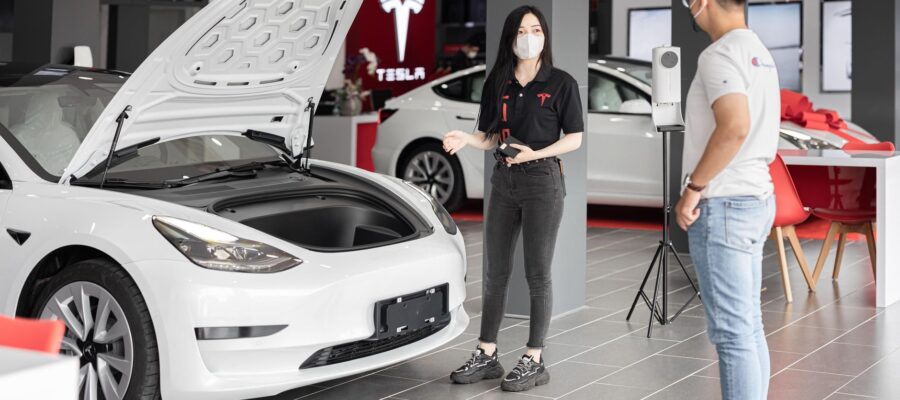
In terms of models, the Tesla Model Y remained the clear sales leader among electric vehicles in April, thanks to its long range, extensive charging infrastructure and attractive design. At the top of the preference list are models from various segments that have captured buyers’ attention with their combination of advanced technology, solid performance and competitive pricing.
Romania in the context of the European electric car market
Although Romania still maintains a relatively modest percentage of electric cars in the national park compared to Western countries, interest in these vehicles is constantly growing. Government facilities, along with improved charging infrastructure and increased awareness of the benefits of electricity, are helping to stimulate demand.
Rising fuel prices and geopolitical developments will most likely also have a direct impact on the Romanian market, encouraging even more motorists to consider purchasing an electric car, new or second-hand, from Western Europe.
Challenges and prospects for the electric car market
Despite the optimistic numbers, the electric car market still faces some major challenges. The main obstacles concern fast charging, insufficiently developed infrastructure in some regions, but also the initial costs which remain higher than classic fossil fuel models.
Furthermore, the availability of battery materials such as lithium and cobalt and pressures on supply chains are factors that may influence market dynamics.
However, technological advances and massive investments in research and development herald a gradual reduction of these barriers. European states continue to implement support policies and car manufacturers are working on new models with greater autonomy and more affordable prices.
Conclusion
The 38% increase in electric car sales in Europe in April 2026 highlights a major paradigm shift in urban and regional mobility. Geopolitical conflicts and energy price trends have accelerated the adoption of electric vehicles by Europeans, and this trend is expected to continue in the long term.
Romania, as an integral part of the European market, will have to follow this wave, adapting its infrastructure and policies to support the transition towards cleaner and more energy-efficient transport. For Romanian motorists, this represents an opportunity to access modern technologies and contribute to environmental protection, while benefiting from reduced fuel and maintenance costs.
As more and more Europeans opt for electric cars, the future of mobility promises to be electric, green and sustainable.
latest posts published
The most comfortable car: a top 10 of the most comfortable cars
Van rental in Bucharest: when is it best and which model to choose? | Dex Car

Electric car sales in Europe rose 41% in March, boosting the new car market
Hongqi could start producing cars in Europe at the Stellantis plant in Spain
Leapmotor announces the launch of 3 new models on the European market in 2026
The best used luxury coupé and cabriolet models
Lotus V8 hybrid supercar revealed

Around Bucharest – day trips from Bucharest
Find out all about the 2026 McLaren Artura Hybrid 3.0 plug-in