May 14, 2026 · 4 minute of reading
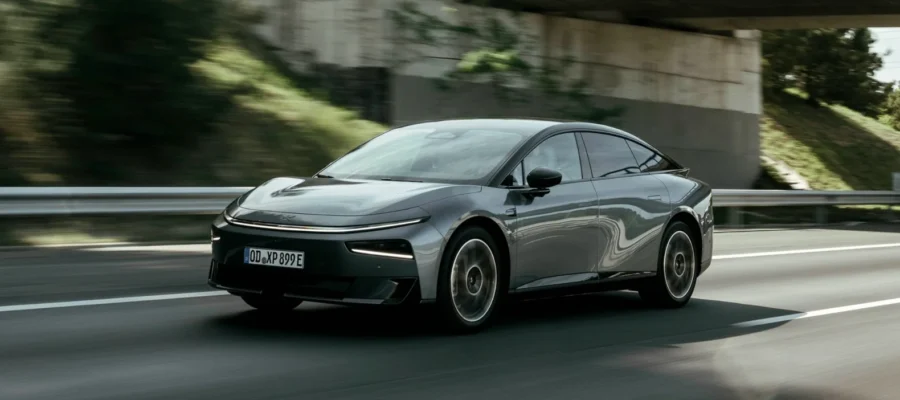
Chinese carmaker Xpeng is taking important steps to expand into the European market, a territory considered strategic but full of challenges for non-European brands. After starting to produce cars in Europe last summer at the Magna Steyr plant in Austria, Xpeng has now entered advanced talks with Volkswagen to acquire a plant on the continent.
Xpeng and ambitions in Europe: a long-term strategy
Xpeng, one of the most dynamic Chinese manufacturers of electric vehicles, aims to establish itself in a European market increasingly interested in electric mobility. But penetration by a non-European manufacturer is far from simple, given the numerous regulations, tariffs and protectionist policies designed to support local manufacturers.
In this context, the Chinese company wanted to avoid import barriers and gain a competitive advantage through local production. From this perspective, the start of production in the Austrian Magna Steyr plant was an important step. This collaboration initially made it possible to produce models in Europe, reducing logistics costs and at the same time giving the image of a player with a local presence.
Talks with Volkswagen, a strategic opportunity
According to the latest information, Xpeng is in talks with Volkswagen, the German automotive giant, to buy a plant in Europe. While details have not yet been made public, industry sources suggest that the parties are exploring the possibility of an ownership transfer or vital industrial partnerships to strengthen Xpeng’s presence in the European market.
For Volkswagen, this move could be financially beneficial, given the challenges facing the traditional auto industry and the need to reorganize its production capabilities. At the same time, selling a plant to an emerging electric manufacturer could free up resources for other strategic projects and contribute to better asset management.
At the same time, for Xpeng, acquiring an existing plant would allow it to scale production and reduce dependence on third-party plants or contractors like Magna Steyr. An in-house facility in Europe would optimize the supply chain and quickly adapt to the specific needs of each local market.
The challenges of the European automotive industry for non-European companies
The entry of a Chinese manufacturer into the European market is not without difficulties. First, the stringent emissions, safety and quality regulations are rigorous and set high standards for any manufacturer.
Furthermore, in recent years, the European Union has introduced several measures aimed at limiting the direct importation of vehicles from outside the continent, including through customs tariffs and technical criteria which sometimes pose additional obstacles to non-European products. Therefore, local production becomes not only a profitable option, but a necessity for brands that want a solid and sustainable presence in Europe.
Xpeng in Europe – from the beginning to today
The consolidation of its position in the European market officially began last summer, when Xpeng launched its production at the Magna Steyr plant, one of the most respected contract automotive manufacturing facilities in Europe. This factory, located in Graz, Austria, is known for its collaborations with various manufacturers and the quality of its assembly of electric and luxury models.
Thanks to this agreement, Xpeng was able to more quickly target European customers with a portfolio of models adapted to local tastes and norms, reducing delivery times and accumulating valuable experience in European automotive manufacturing and distribution.
What is the future of Xpeng and the local market?
If talks with Volkswagen reach an agreement, Xpeng could become one of the first Chinese automakers to have its own plant on the European continent. This would represent a historic move in the automotive landscape, marking a clear shift in manufacturing dynamics and influence in Europe.
In the medium and long term, this could accelerate the expansion of Xpeng models in countries such as Germany, France, Italy or even Romania, where interest in electric vehicles is growing rapidly. At the same time, European production units could benefit from investments in technology and innovation, supporting the development of the electric car market at continental level.
Conclusion
Xpeng’s ambitious plans to purchase a European plant, along with negotiations with Volkswagen, underline the importance of the European market in the Chinese automaker’s strategy. This is not just a simple geographical expansion, but a serious attempt to penetrate and integrate into a complex industrial and economic environment, characterized by rigid rules and ruthless competition.
In the context of the acceleration of the transition to electric mobility and the increase in demand in Europe, local presence becomes essential, and Xpeng seems to be playing this card with great precision and patience. It remains to be seen how these negotiations will materialize and what impact they will have on the European automotive industry in the near future.
For fans of electric cars and the next steps of the global automotive industry, the evolution of Chinese manufacturers like Xpeng into the European market is a topic that deserves our constant attention. We continue to monitor developments and will keep you updated with the latest information.
latest posts published
The most comfortable car: a top 10 of the most comfortable cars
Van rental in Bucharest: when is it best and which model to choose? | Dex Car

Electric car sales in Europe rose 41% in March, boosting the new car market
Hongqi could start producing cars in Europe at the Stellantis plant in Spain
Leapmotor announces the launch of 3 new models on the European market in 2026
The best used luxury coupé and cabriolet models
Lotus V8 hybrid supercar revealed

Around Bucharest – day trips from Bucharest
Find out all about the 2026 McLaren Artura Hybrid 3.0 plug-in